

Related posts
Feeding Tongs and Tweezers: Safer Handling at Feeding Time

Why feeding with tools rather than fingers protects both you and the animal, how to choose between tongs and tweezers, and how to keep them clean.
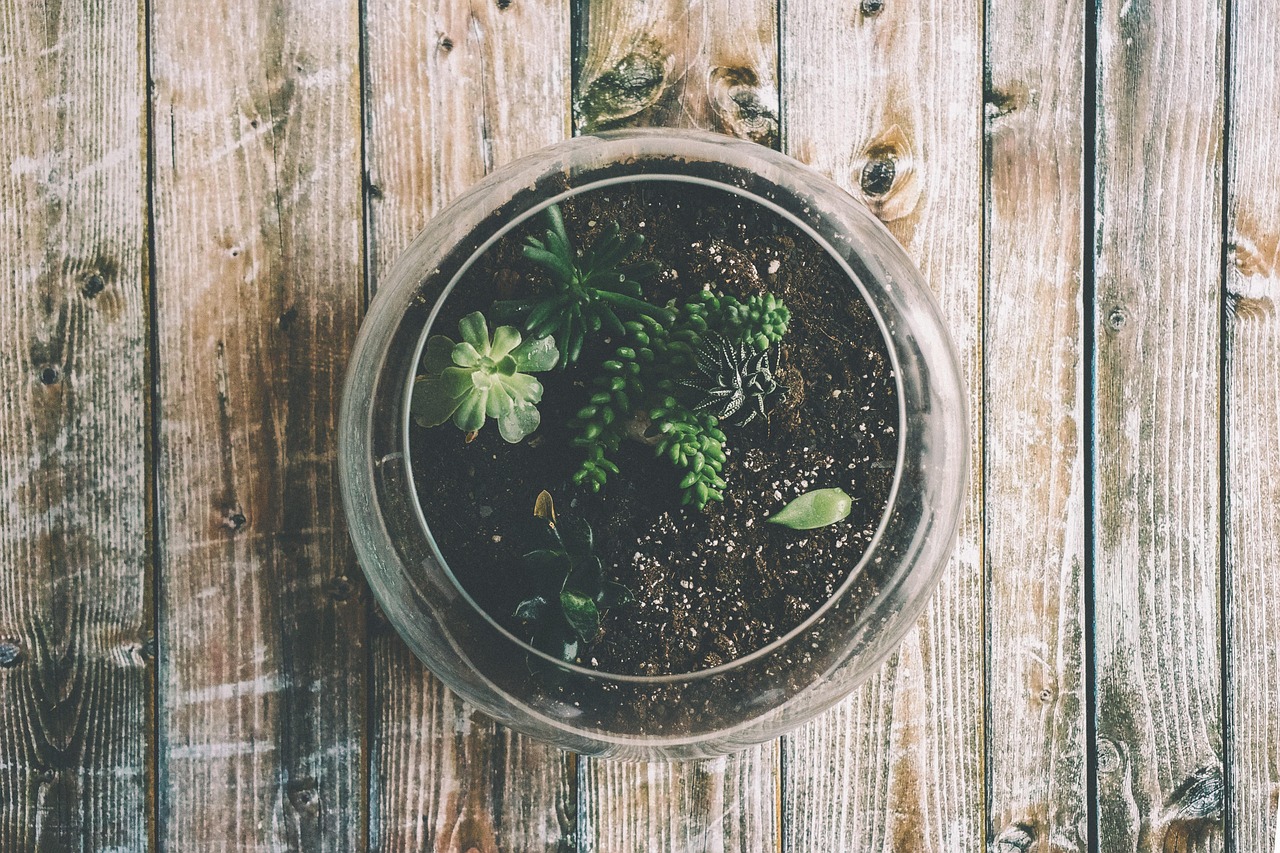
Humidity in a terrarium is not one number. It varies from the substrate surface to the top vent, from the misted end to the dry end, and across the hour after you spray. A single reading from a dial stuck to the glass is close to meaningless.
Warm air holds more moisture and rises. The air near the top of a heated enclosure will read differently from air at substrate level where the animal spends its time. Damp substrate and a water bowl create a local microclimate around them.
So the question is never “what is the humidity” — it is “what is the humidity where the animal actually is”.
Mini digital combined thermometer-hygrometer units are inexpensive enough to run two or three. See thermometers and hygrometers.
Spray the enclosure and the reading jumps immediately, then falls over the following hour or two. Both numbers matter. The peak tells you whether the spray was heavy enough; the level it settles to tells you what the animal lives in most of the day.
Take a reading right before the next misting, not right after. That baseline is the number to compare against a care sheet.
An automatic mister on a timer produces a far more consistent cycle than manual spraying, which tends to be heavy when you remember and absent when you do not. See misting and substrate.
The single biggest lever on ambient humidity is what is on the floor and how damp it is. Sphagnum moss holds and releases moisture slowly and is a straightforward way to raise a humid zone without soaking the whole enclosure. A moss-filled humid hide gives the animal a place to choose higher humidity when it wants it, which is more useful than pushing the whole enclosure up.
Ventilation is the counterweight. Too little airflow and you get stagnant, persistently wet air, which causes respiratory problems and mould rather than good humidity. Too much and nothing you spray stays.
Incomplete sheds are one of the more reliable signs that humidity is too low. Retained skin around the toes and the tail tip, or a snake shedding in pieces rather than one length, both point that way.
Persistent wetness has its own signs — substrate that never dries, a musty smell, or scale rot on the belly. That is a ventilation problem more often than a spraying problem.
These are indicators, not diagnoses. Anything involving the eyes, breathing, or open skin is a vet visit rather than an equipment change.
Digital hygrometers drift. The salt test checks one: put a teaspoon of table salt in a bottle cap, add a few drops of water to make a slurry, seal it in a bag with the hygrometer for six hours. A correct unit reads about 75%. If yours reads 68%, note the offset and apply it — you do not need to replace the unit, you need to know its error.
Every change you make to airflow changes your humidity reading, and the reverse. Covering part of a mesh lid raises humidity and lowers airflow together; you cannot adjust one without moving the other. That is why a setup that reads correctly on the hygrometer can still develop mould — the number was right, the exchange of air was not.
The practical test is smell and substrate. A properly ventilated humid enclosure smells of nothing in particular and the top layer of substrate dries between mistings. Persistent damp on the surface means airflow, not humidity, is what needs adjusting.
A water bowl at the warm end evaporates faster and raises ambient humidity; the same bowl at the cool end barely moves the reading. This is a free adjustment worth trying before adding equipment — move the bowl and take readings again for two days.
Two readings a day for a fortnight, written down, tells you more than any single measurement. Patterns show up in a log that are invisible in the moment: a slow climb across the week, a dip every time the heating cycles, a spike that never settles. Once the setup is stable you can stop logging and go back to a daily glance.
Browse the range or ask us about a specific species.
Open daily 08:00–19:00